A Pilot Can Test a Process, Not Settle Every Question
A pilot policy can reveal where delivery falters and what to improve, while keeping claims about lasting effects and wider adoption in proportion.
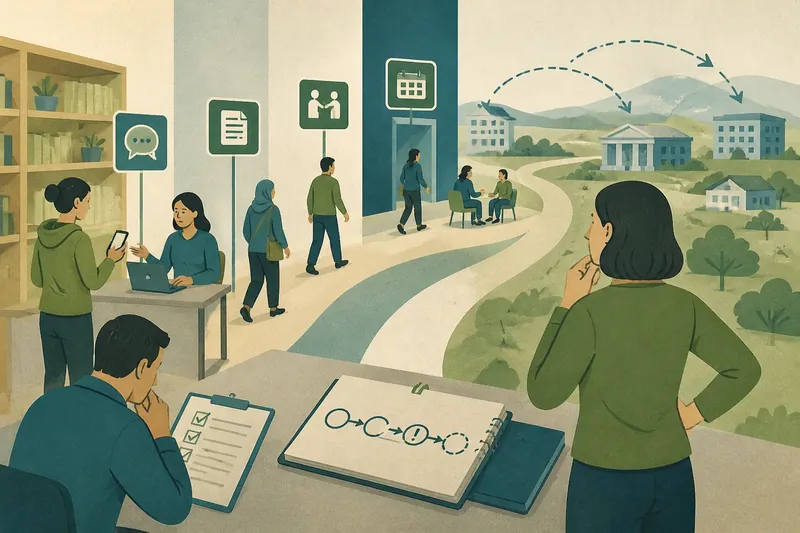
A pilot policy can show whether a service reaches people, whether staff can apply its rules and where delivery gets stuck. It cannot, by itself, settle whether the policy will produce lasting benefits or work the same way in a different place. That distinction matters when a promising trial is being discussed as a reason to expand.
Think of a pilot as a rehearsal in a particular room: it can expose a snag in the running order, but it cannot tell you how every audience will respond. The following questions help keep the evidence tied to what the trial actually did.
1. What was the pilot designed to find out?
Start with the question the pilot was set up to answer. A trial might be intended to check whether an online application can be completed without help, whether a new referral route reaches eligible residents, or whether caseworkers can apply a rule consistently. Those are different questions from whether the policy improves people’s lives over time.
Look at the pilot’s stated purpose, operating plan and evaluation questions. If its main task was to establish whether a process could run, its findings should be read as evidence about that process. A successful launch is useful, but it is not the same as evidence that the policy’s intended outcome has followed.
It is also worth asking what the pilot was not designed to assess. A short operational trial may not track outcomes for long enough, compare participants with a suitable alternative, or include a sufficiently varied group to answer questions about effects. Naming those limits is not dismissing the work; it clarifies what the work can support.
2. Which parts of delivery did it actually test?
“The pilot worked” can hide several separate judgements. Did people hear about the offer? Could they apply? Were decisions made in time? Did staff understand the guidance? Could participants receive the service they were referred to? Each point describes a different link in delivery, and a break at one link can matter even when the others hold.
Follow the route from first contact to the service or benefit delivered. Records might show whether messages were sent, applications were completed, referrals arrived and appointments took place. Staff conversations can help explain why a step stalled: perhaps a form asked for information people did not have to hand, or a hand-off between teams was unclear.
Say a local authority pilots a home-energy advice service through libraries. It finds that residents readily book conversations, but advisers often lack a clear route for referring people to specialist help. The observable result is that the booking process is usable while the referral process needs attention; it would be a stretch to claim from that alone that household energy use has changed.
Keep the chain visible in reporting. “People could book an appointment” is more precise than “the service was effective”, unless the evidence also addresses what happened after the appointment and how that relates to the policy’s intended result.
3. Who took part, and who did not?
A pilot’s participants are not automatically a miniature version of everyone a policy might reach. They may come from a few neighbourhoods, be recruited through one trusted organisation, or already be comfortable using the service. That composition can help explain delivery in the trial, but it narrows what can be said about people who were absent.
Check how participants entered the pilot and what barriers might have kept others out. Did people need internet access to apply? Was information available in relevant languages? Could someone take part if they had irregular working hours, a disability, or little confidence dealing with public services? These are questions about access, not assumptions about any group’s behaviour.
It helps to separate eligibility from participation. A policy may formally include a broad group while the pilot mostly reaches those easiest to contact. If so, a smooth process for participants may coexist with a weak route to people who need more support. The next design decision may be to adapt recruitment or access before making a claim about reach.
4. What would count as evidence of a lasting effect?
Operational signs can appear quickly; social outcomes may take longer and may be influenced by other changes. A programme can deliver its service as planned without producing the hoped-for result, while a favourable short-term change may not persist. The evaluation question therefore needs to match the outcome and the time over which it could reasonably emerge.
Ask what outcome matters, how it can be observed and what other explanations could account for a change. For a policy intended to support people into work, attendance at a meeting is a delivery measure, while employment and its durability are different outcomes. Neither measure is pointless, but they answer different questions.
To judge whether the policy caused an outcome, evaluators need a credible way to consider what might have happened without it. A pilot that records participant feedback and completed appointments may reveal whether people value the service and whether it is being delivered. Without a suitable comparison or other defensible approach, it cannot confidently attribute broader changes to the policy itself.
Follow-up matters, too. If effects could fade, shift or emerge later, an early report should say that the outcome has not yet been established rather than treating the first signs as the final result.
5. Would the same approach work somewhere else?
Delivery depends on its setting. A pilot may rely on a particular council’s staff, an established community partner, a nearby specialist service or a local data system. Those conditions are part of what made the trial possible, even if they sit outside the policy’s headline description.
Before carrying a model elsewhere, identify which elements seem essential and which could be adapted. A clear referral pathway may be necessary, while the organisation that provides it may differ by area. Asking local delivery teams what capacity and relationships they have can uncover whether the model is transferable or needs redesign.
Be careful with broad claims drawn from one setting. A pilot can make a case for trying the approach in another place, especially if its conditions are understood. It does not establish that another authority, school or health service will see the same results under different staffing, demand or institutional arrangements.
6. What should happen after the pilot?
A useful evaluation ends with decisions, not just a verdict. Depending on what the trial revealed, decision-makers might refine the process, gather stronger evidence about outcomes, test delivery in a different context, or stop an approach that cannot be made workable. Each option should connect to a finding rather than to the wish to call the pilot a success.
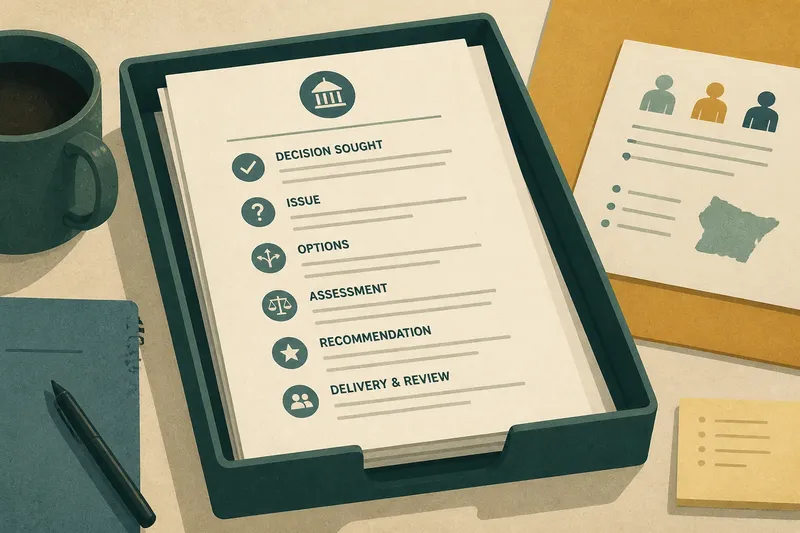
For a clear decision, set out:
- What was tested: Name the service, rule or delivery route that participants encountered.
- What worked in delivery: Identify the steps people completed and the conditions that helped.
- Where delivery faltered: Describe the obstacle and who experienced it, where the evidence allows.
- What remains unknown: State which lasting outcomes or wider settings the pilot did not assess.
- What comes next: Link a proposed change or further evaluation to the unresolved question it addresses.
This format keeps operational learning valuable without asking it to do the work of a full impact assessment. It also gives the public a more useful account than a simple label of “success” or “failure”: what was learned, what was not learned and why the next choice follows.
What can a pilot tell us, and what remains open?
Can a pilot show that a policy works?
It can show that a particular version of a policy was delivered under particular conditions, and may provide early evidence about outcomes. Whether it caused lasting effects requires evidence suited to that claim, not just a record that the service operated.
Does a successful pilot justify expansion?
It can support considering expansion, but decision-makers should first understand the resources, partnerships and local conditions the trial depended on. They should also identify what evidence is still needed about effects and access.
What if the pilot reaches few people?
That may still reveal useful process problems, especially if the trial was designed to examine delivery. It limits claims about broad reach and may point to changes in recruitment, accessibility or the setting before another evaluation.
Should a pilot be stopped if it has problems?
Not automatically. A fixable hand-off or confusing form may be a reason to revise the design, while a fundamental barrier or lack of a plausible route to the intended outcome may justify stopping; the evidence and purpose of the trial should guide that judgement.
How should a pilot’s claims be phrased?
Use language that names the finding and its boundary. “Participants could complete the application with staff support” tells the reader what happened; “the policy improved access” makes a broader claim that needs evidence about who gained access and what changed for them.
The same care applies to a positive result. A pilot may establish that a process is feasible in its setting, while leaving questions about cost, sustained outcomes or replication unanswered. Acknowledging those open questions makes the next decision more credible, not less.
When reading or commissioning a pilot policy evaluation, look for a direct line between its purpose, the evidence collected and the claims made. If those three do not match, the report may still offer practical lessons—but its conclusions should stay close to what the trial could actually observe.